

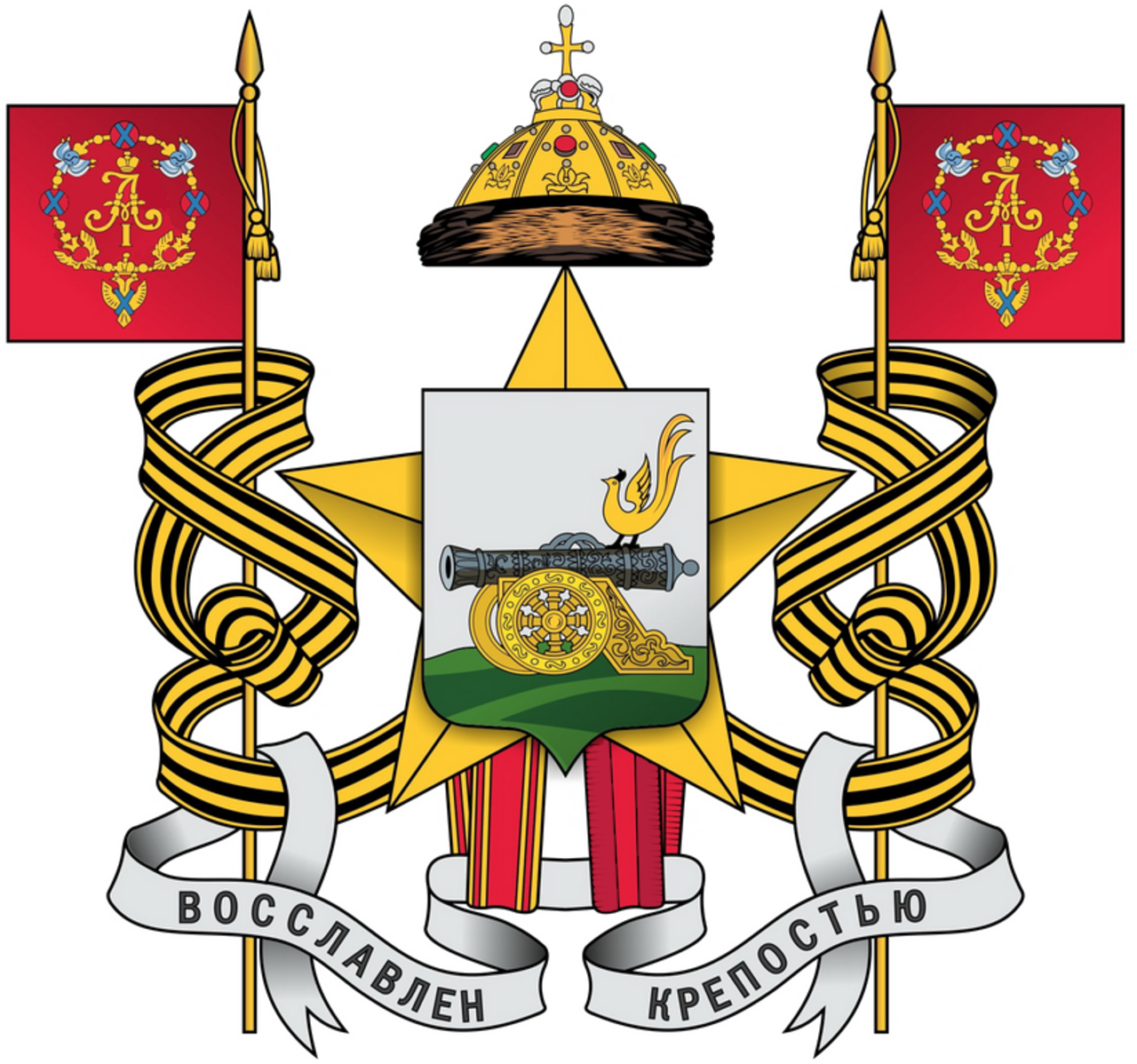
Smolensk is one of the oldest cities in Russia, the administrative, industrial, and cultural center of the Smolensk region. Its first mention in chronicles dates back to 863, when it is mentioned as the center of the Krivichi tribal union, along with Kiev, Novgorod, and Staraya Ladoga. Today, it has a population of 310,460.
Geographical position and role in history
The city is located 378 km west of Moscow, on the upper reaches of the Dnieper River. Thanks to its advantageous location on routes from Moscow to Belarus, the Baltics, and the countries of Central and Western Europe, Smolensk has served as a reliable defense for the capital for centuries. This is why it is called the "shield city," "the shield of Russia," and "the key city."
Smolensk"s importance as a strategic outpost was evident in three key episodes in Russian history:
– the Time of Troubles (1609–1611) – a 20-month heroic defense of the fortress from the troops of the Polish King Sigismund III.
– The Patriotic War of 1812 – during the Battle of Smolensk, 120,000 Russian soldiers fought off Napoleon"s 180,000-strong army for two days. Only 10% of the buildings survived the fire.
– The Great Patriotic War – The Battle of Smolensk in 1941 delayed the German advance on Moscow for more than two months.
For its heroism in 1985, Smolensk was awarded the title of "Hero City" and the Order of Lenin and the Order of the Patriotic War.
1st degree and the Gold Star medal.
Architectural heritage
Smolensk is famous for its unique historical monuments:
The fortress wall was built in the late 16th century. It originally stretched 6.5 km and contained 41 battle towers. Eighteen towers and wall fragments remain today.
The Assumption Cathedral on Cathedral Hill is one of the main symbols of the city, visible from afar.
The 12th-century churches—the Church of Peter and Paul, the Church of John the Evangelist, and the Church of Michael the Archangel (Svirskaya)—are the most important monuments of pre-Mongol architecture.
The main architectural ensemble of Cathedral Hill also includes the Epiphany Cathedral, the Church of St. John the Baptist, and the bishop"s house.
The Heroes" Memorial Square near the fortress wall is home to Russia"s second necropolis—after the Kremlin wall in Moscow. The Eternal Flame, lit by Smolensk native Mikhail Yegorov, the same man who raised the Victory Banner over the Reichstag, also burns here.
Economy and industry
Smolensk is a major industrial center. The city is home to mechanical engineering, instrument-making, and electrical engineering enterprises, including the Smolensk Aircraft Plant, the Izmeritel, Analitpribor, and Smolensk Automobile Unit Plant plants, as well as the Kristall diamond factory, the largest in Russia.
The city"s economy is demonstrating steady growth. In 2025, Smolensk"s budget amounted to 14.7 billion rubles, with revenue growth of 8.2%. Industrial production in the region has grown by almost 15% over the past two years, and a record influx of private investment in 2024 exceeded 108 billion rubles.
Culture and education
Smolensk is a significant cultural center. It boasts the Smolensk Chamber Theater, a drama theater, a puppet theater, the Museum of the Patriotic War of 1812, the Museum of the Great Patriotic War, the S. T. Konenkov Sculpture Museum, the Smolensk Flax Museum, the State Architectural and Art Museum-Reserve with a rich collection of paintings, and 21 city libraries.
Of particular cultural value is the Talashkino estate in the Smolensk region—the estate of the philanthropist Princess Maria Tenisheva, where Vrubel, Repin, Korovin, and Roerich lived and worked. It is home to the unique Teremok (Little Teremok) and the Church of the Holy Spirit, featuring frescoes by Roerich.
The education system includes 26 higher education institutions, including a medical academy, a pedagogical university, an institute of arts, and others.
Modern life
Smolensk is a city with a well-developed infrastructure. Public spaces are being actively improved: in 2025, three public areas and nine courtyards were improved under national projects, and schools and kindergartens were overhauled. The city plans to open a House of Crafts to preserve folk crafts.
Smolensk bears the unofficial title of "key city"—and today it remains one of the key centers in western Russia, combining a rich history, developed industry, and a vibrant cultural life.
Website of the Smolensk city administration: https://www.smoladmin.ru/.