

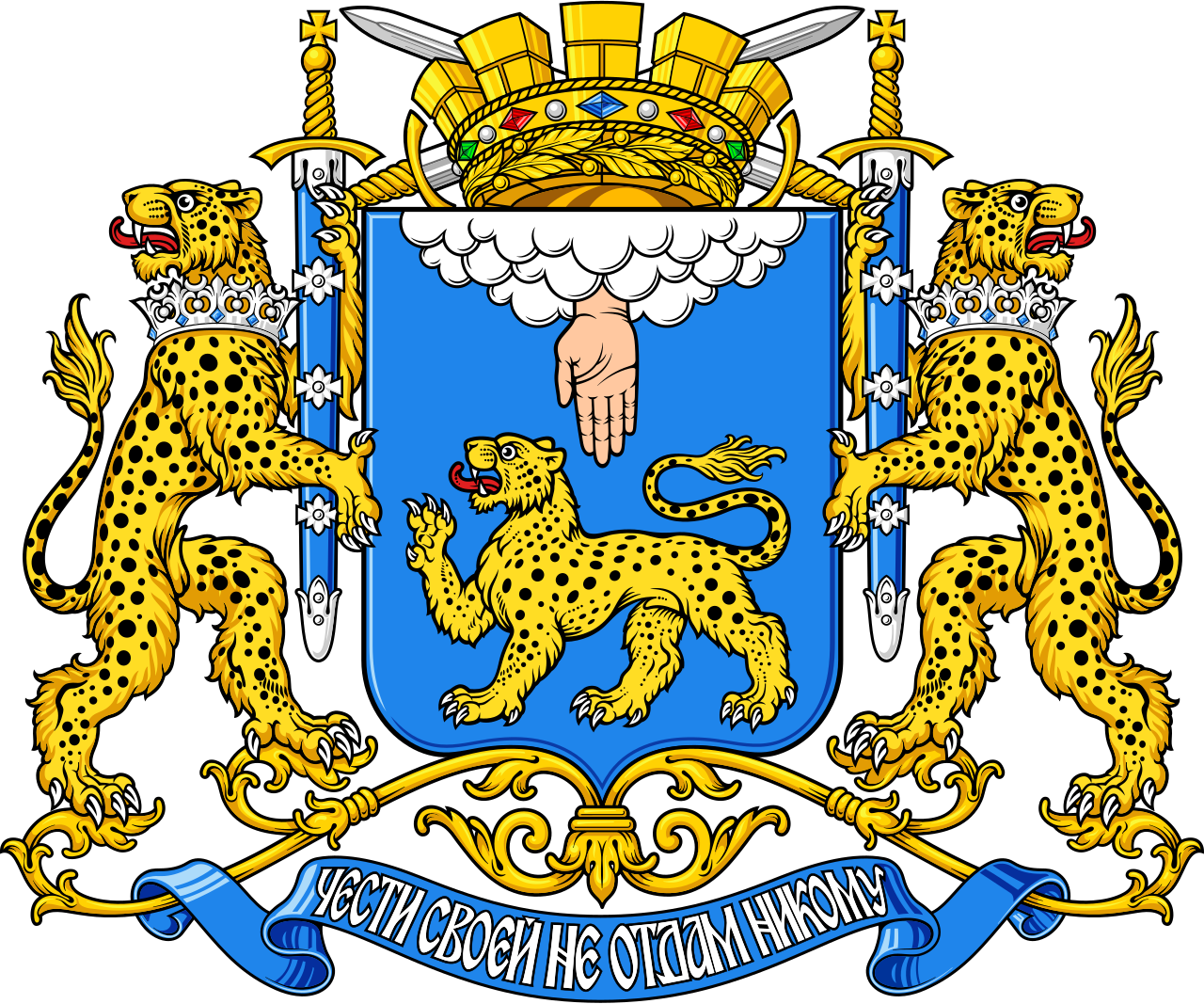
Pskov is one of the oldest cities in Russia, the administrative, industrial, and cultural center of the Pskov region. It was first mentioned in the Laurentian Chronicle in 903, when it is referred to as "Pskov" (or "Pleskov")—the city from which Prince Igor married Olga.
Geographical position and role in history
The city is located on the banks of the Velikaya River at its confluence with the Pskova River. Thanks to its advantageous position on this waterway, Pskov already occupied a significant territory by the 10th century. For several centuries, it remained a key military outpost, defending Rus" from the north and west. This is why Pskov is called the "warrior city" and the "shield of Russia."
Pskov"s importance as a strategic fortress was evident in key episodes in Russian history:
– The Battle on the Ice (1242) – Alexander Nevsky liberated Pskov from the Teutonic Knights;
– Livonian War (1581–1582) – the defenders of Pskov, led by the governor Shuisky, heroically repelled 30 assaults on the fortress by the troops of Stefan Batory;
– the events of 1917 – it was in Pskov that the last Russian emperor Nicholas II abdicated the throne;
– The Great Patriotic War – the city was occupied from July 9, 1941 to July 23, 1944, liberated by the troops of the Soviet Army.
For its heroism, Pskov bears the title of "City of Military Glory".
Architectural heritage
Pskov is renowned for its unique monuments of ancient Russian architecture. In 2019, 10 monuments of the Pskov architectural school were inscribed on the UNESCO World Heritage List. Among them:
The Pskov Kremlin (Krom) is the city"s main stronghold, built on a cliff at the confluence of rivers. The total length of the city"s fortress wall exceeded
9 km. By the 16th century, 37 towers were built along the perimeter.
Dovmont"s town is a fortification built in the 13th century by Prince Dovmont, who fled Lithuania and was elected ruler by the Pskovites.
The Transfiguration Cathedral of the Mirozhsky Monastery, founded in the 12th century, is unique in that it contains the most complete collection of pre-Mongol frescoes in Russia.
The Pogankin Chambers are the largest secular structure of Ancient Rus" that has survived to this day. The building occupies an entire city block, and the tallest section is four stories high.
In the architectural ensemble of Pskov, one can see not only ancient churches, but also the oldest secular buildings in Russia—individual estates, chambers, and even an entire block.
Economy and industry
Pskov is a significant industrial center. Its leading industry is mechanical engineering. Dozens of large enterprises operate in the city:
– Pskov plant of mechanical drives (production of motor drums, gearboxes, flanges);
– Elementum plant (heat exchange and refrigeration equipment, included in the list of systemically important enterprises);
– Pskov Electric Machine-Building Plant;
– pilot plant “Mikron”, “Velmash”, “AVAR”;
– special economic zone "Moglino";
– Pskov boat shipyard (serial production of composite boats, motorboats and yachts since 1988);
– Pskov bakery is one of the largest food industry enterprises in the Northwest.
Pskov has a well-developed light industry, particularly flax processing, as well as food processing. The Slavyanka sewing factory produces men"s and children"s suits under the TRUVOR brand.
Culture and education
Pskov is a major cultural and educational center. It is home to two theaters, a philharmonic society, the Pskov State United Historical, Architectural, and Art Museum-Reserve with a unique collection of Pskov school iconography and an art gallery, a children"s museum center (opened in December 2025 as part of the national project "Family" and equipped with modern technology, including muffle furnaces, weaving machines, a 3D printer, and VR headsets), libraries, a planetarium, and three higher education institutions.
The parklands are of particular cultural value. Kuopio Park (named after its Finnish sister city) stretches from the pedestrian bridge in Brody to Kuznetsky Most and is equipped in the style of the best European parks: bike paths, benches, sun loungers, and playgrounds. In the summer, you can go boating, and in the winter, skiing and snowboarding.
Modern life
Pskov is rapidly developing. Archaeological research is underway in the city—the ruins of ancient churches near the Dovmont Wall have been preserved for study. Following the 2010 fire, the tents of the Vlasyevskaya and Rybnitskaya towers of the Krom were restored and opened to visitors.
Pskov remains one of the key cultural and industrial centers in northwestern Russia, combining a rich history, developed industry, and a vibrant cultural life.
Website of the urban district "City of Pskov": https://pskov.gosuslugi.ru/